

If your group chat blew up this week with “green cards are dead, everyone has to leave the country,” breathe. I read the actual memo. Here’s the calm version.
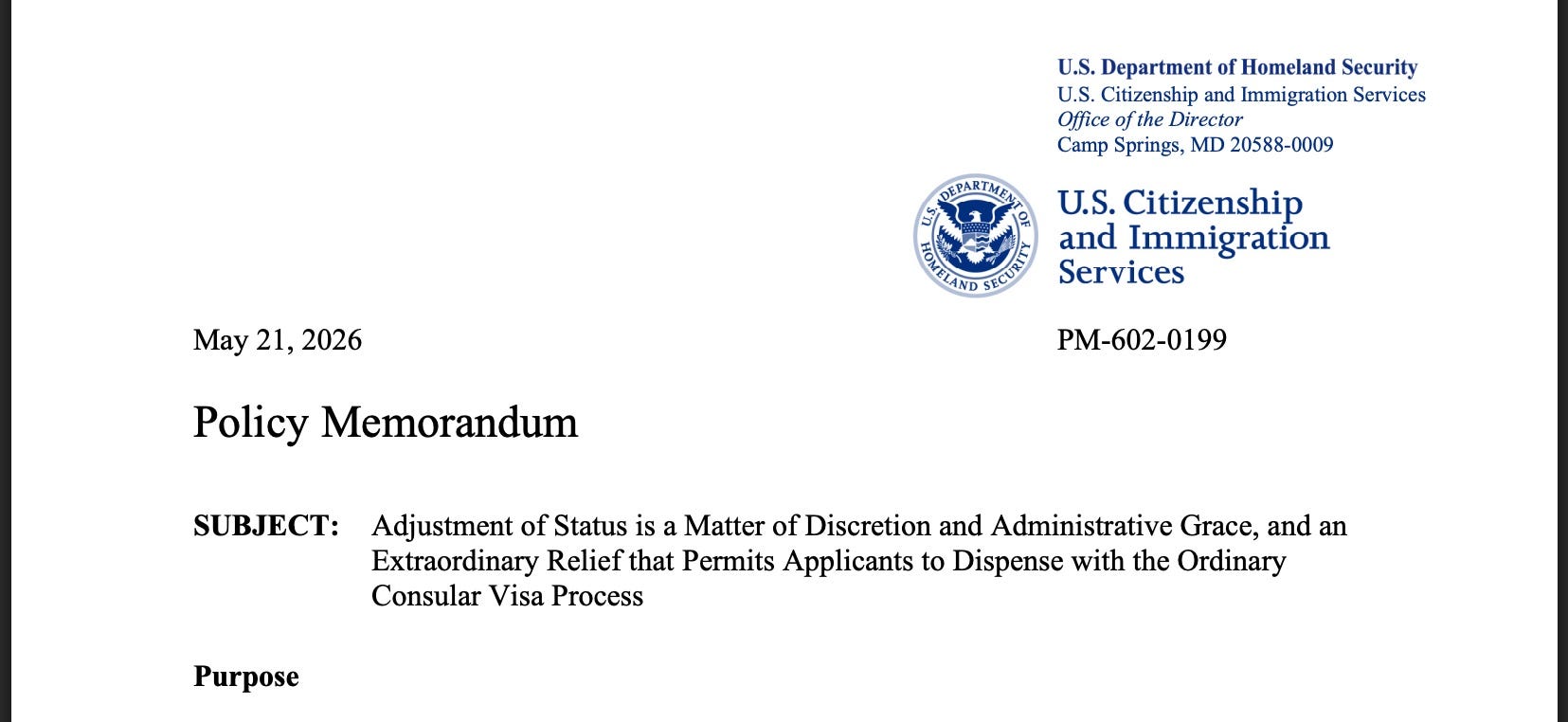
On May 21, USCIS put out a memo (PM-602-0199) saying that adjusting your status inside the US, the green card step you do without flying home, is discretionary. Officers weigh your case, they don’t rubber-stamp it.
Here’s the part the panic skipped: this is not a new law. No new eligibility rules. Nobody’s filings are banned. It reaffirms a principle that was already there. As immigration attorney Ana Gabriela Urizar put it, the memo “does not necessarily signal a major shift in how most properly prepared adjustment of status cases are analyzed.”
If you’re on H-1B or L-1: dual intent still works with adjusting your status. The memo says so directly. But it also says your status alone isn’t enough to win the decision. Officers weigh the whole case now, so a clean, well-prepared one carries more weight than it used to. If you’re on valid status with a real case, nobody is automatically putting you on a plane.
USCIS’s own spokesman, after the backlash: people whose applications show “an economic benefit or otherwise are in the national interest will likely be able to continue on their current path.”
Now notice who’s selling the panic. A lot of the loudest “the system is closed, EB1A and NIW are dead” voices are influencers, not lawyers. To be clear, this memo covers green card adjustment across the board, H-1B, L-1, EB-1A, NIW, family based. Same answer for everyone: the system got tighter, it did not close. When you’re scared, read the firms doing the filings, not the guy farming your fear for views.
And here’s the founder read: the more discretion matters, the more the system rewards people who built something with obvious value. Economic benefit. National interest. That’s a company. Build it.
I’m not your lawyer. Talk to yours. This is where things stand as of May 2026, and lawyers expect court challenges, so it can shift. But don’t outsource your peace of mind to a viral post.